Exmouth Weather in Winter: What to Expect & When to Go
Sitting at the tip of the North West Cape in Western Australia, Exmouth WA winter is about as far from a southern Australian winter as you can get without leaving the country. When the rest of Australia is cold, damp and reaching for another layer, Exmouth weather is sitting at a breezy 24–25°C with clear skies, flat-ish water, and one of the most biodiverse marine environments on the planet just offshore.
This was exactly the logic that got us packing. We drove up from Perth (our own escape from winter) with two weeks planned around scuba diving, hiking and wildlife. It was (mostly) brilliant. It also humbled us. Here’s the honest version of what to expect, and why winter is genuinely the best time to go Exmouth, plus how to plan a trip that gives you the best shot at the full experience!
This post contains affiliate links – if you book or buy through them, I may earn a small commission at no extra cost to you.
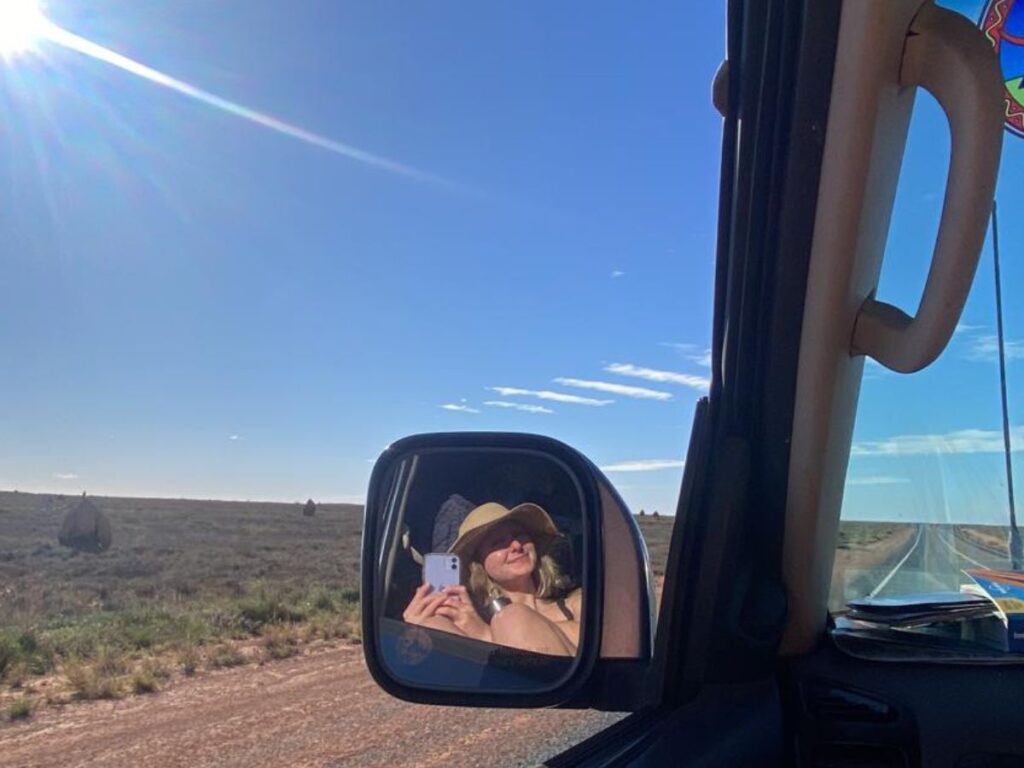
Why Exmouth Winter Is the Best Time to Visit
Let’s start with why the timing works so well…
The weather is genuinely great. Exmouth’s dry season runs from around April through to November, and winter sits right in the sweet spot. Daytime temperatures hover around 24–26°C. Warm enough to be comfortable in and out of the water all day, cool enough that you’re not collapsing in the heat. Nights do drop to around 18–19°C, so pack something light for evenings.
Rainfall is minimal. June through August averages just 2–3mm of rain per month in most years. Compare that to Melbourne, which averages around 50mm in July, or Sydney with its grey, gloomy winter drizzle… there’s quite a big difference.
The wildlife is extraordinary. This is the real reason winter is the main event. The Ningaloo Reef during the cooler months is alive with whale sharks, humpback whales, manta rays, dolphins and turtles, and many of these experiences simply aren’t available at other times of year.
You’re not melting. Summer in Exmouth pushes past 40°C and brings genuine cyclone risk. Winter is when you can actually do things all day without hiding indoors from noon onwards.
What Is Exmouth Weather Like in Winter?
Exmouth has a hot, arid climate year-round, but the dry season brings the conditions most visitors come for. Here’s what to expect month by month for Exmouth weather across the winter window:
June
June is technically the coolest and wettest month (though “wettest” is relative – we’re talking around 49mm average and maybe 3–5 rainy days). Days average around 25°C and nights around 19°C. Humpback whales start arriving and whale sharks are still active, making it a genuinely rich month for marine life. Shorter daylight hours mean around 10–11 hours of light per day, but that’s still plenty.
July
July is the most popular month – and for good reason. Temperatures average around 24.5°C during the day and 18.5°C at night, which is absolutely perfect for being active all day. Rainfall is minimal, whale sharks are present, humpback whale numbers are building, and manta rays are highly active. Expect everything to be booked out well in advance.
August
August still feels very much like peak season, with temperatures creeping slightly warmer toward 26°C by the end of the month. Wildlife remains abundant. But this is also when the wind can make its presence felt – and as we discovered firsthand, that matters.
For the full month-by-month breakdown of Exmouth weather throughout the year (including shoulder season, spring and summer) and more information on the best time to visit Exmouth for your specific interests, this guide covers everything in detail.
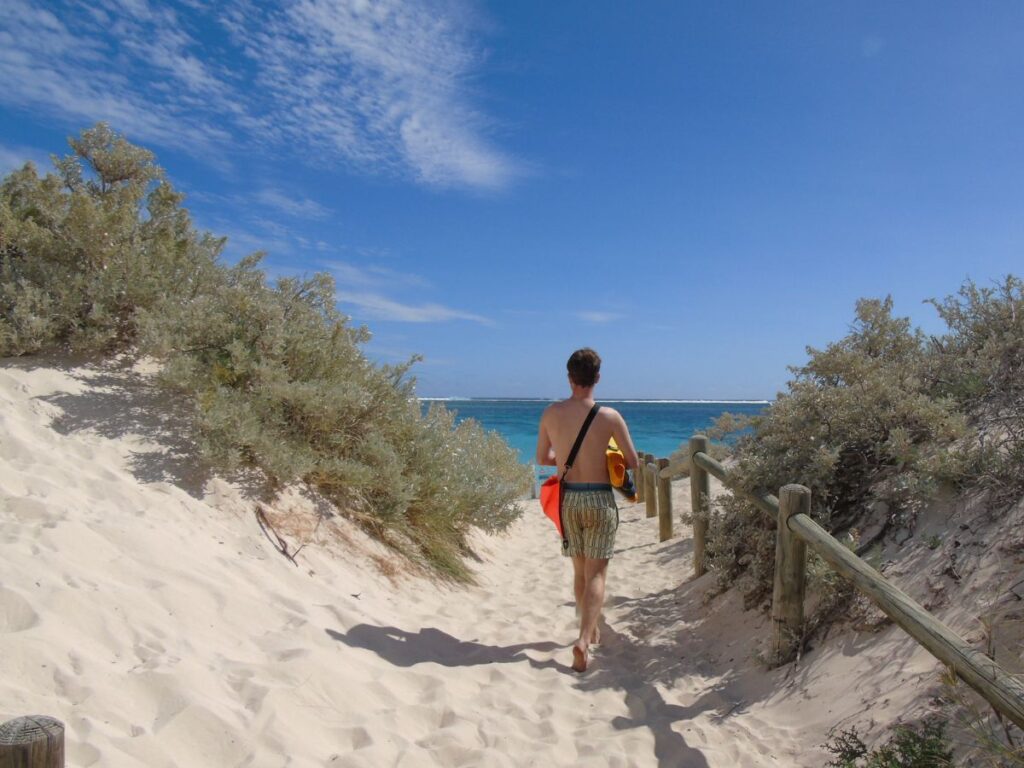
The Marine Life: The Real Reason to Come in Winter
If Exmouth weather in winter is the context, the marine life is the point. Here’s what’s happening in the water during the cooler months:
Whale Sharks
Ningaloo’s headline act. Whale shark season runs from around mid-March through to August, with some operators running tours as late as October. The peak period for sightings is April through July. These are the world’s largest fish (gentle filter feeders that can reach up to 12 metres) and Ningaloo is one of the only places on Earth where you can ethically swim with them. Tours run daily during season (weather permitting), using spotter planes to locate the sharks on the outer reef. Book these months in advance.
Humpback Whales
From June, humpback whales begin arriving at Ningaloo as part of their annual migration from Antarctica. By July and August, numbers are strong and whale watching tours are in full swing. Some operators offer the genuinely extraordinary experience of swimming with humpbacks.
Manta Rays
Winter is prime manta ray season at Ningaloo, with the animals highly active in the cooler water. Many dive and snorkel tours will encounter them without that even being the primary goal.
Everything Else
Dolphins, sea turtles, reef sharks, octopus, incredible reef fish. The Ningaloo Reef is always good. Winter just brings the best conditions for us to see the biggest visitors.
Our Experience:
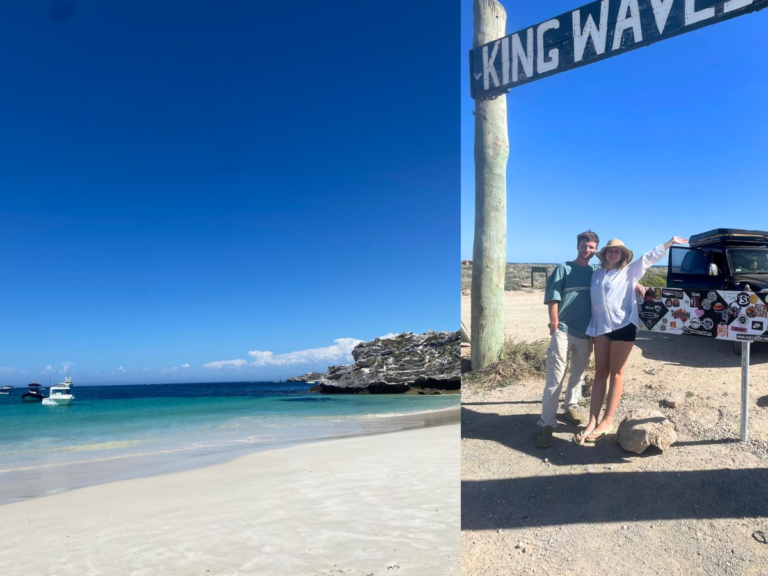
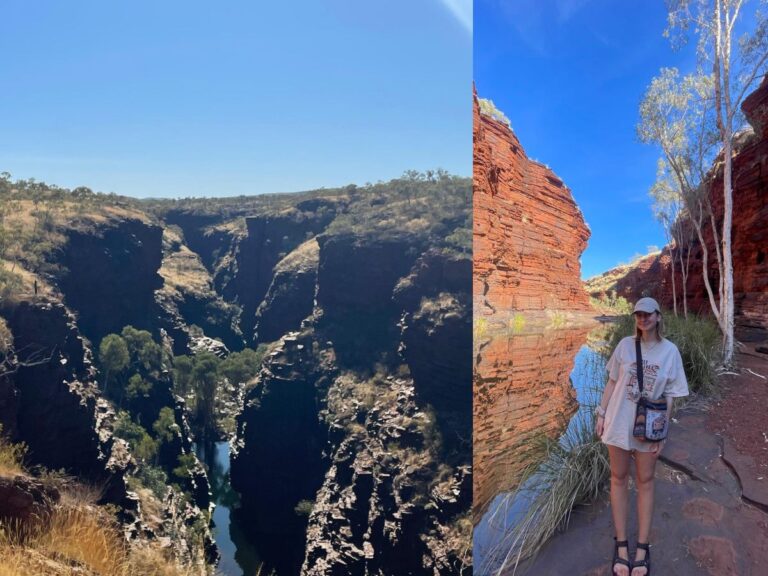
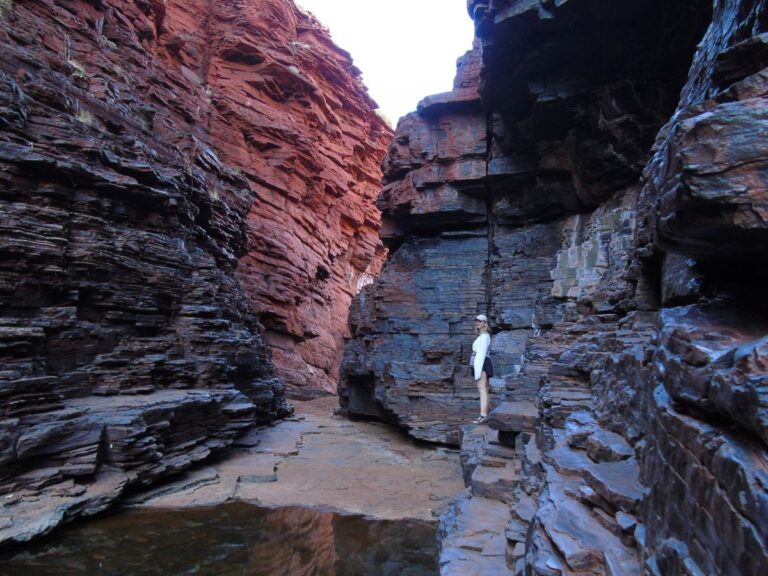
We drove up from Perth (escaping the grim July/August grey!) up to Karijini National Park first, arriving to exactly what we’d hoped for. Clear skies, blue swimming holes, and the two week promise of nature, diving and wildlife.
However, after three days exploring Karijini we made our way to Exmouth. Unfortunately, on the drive we received an email informing us of strong winds in Exmouth and our scuba diving in two days was cancelled. We tried to rebook but couldn’t get a slot before we had to leave Exmouth in three days, and honestly, that one still hurts.
After arriving in Exmouth, we regrouped and spent our first full day at Turquoise Bay. The drift snorkel along the Cape Range park was awesome, where the current carries you along the reef while you just float and watch. The weather was calm, clear and absolutely stunning. Ahead of your trip, you can read my full Turquoise Bay guide here. It was the evening after that brought the strong winds.
Next we drove down to Coral Bay. Got in the water around 9am, and the swell from the previous night had made visibility poor. Not worth staying in long. So we grabbed coffee, waited it out, and went back in around 1pm. Different story entirely, the water had settled and visibility improved. Not the scuba diving trip we’d planned, but a genuinely special afternoon.
The lesson
Even in peak winter, Exmouth weather doesn’t guarantee perfect conditions. Wind events can arrive and stay for days – something worth factoring in when you’re planning the best time to visit Exmouth around specific activities. Our main reason for visiting Exmouth was to scuba dive, so we were genuinely upset to not have enough time on our trip to wait for better weather.
Build buffer into your itinerary, and if there’s something non-negotiable on your list, give yourself enough days to try again.
@travelsbybryony So many special moments on this trip, including watching the sunrise over Charles Knife Canyon in Exmouth 🌅🧡 The sunrise was beautiful, but honestly our favourite thing about this was getting there while it was pitch black, clear skies and soooo many stars 🌟 Charles Knife Canyon is a must while in Exmouth, Western Australia – add this to your roadtrip itinerary!! #travelaustralia #westernaustralia #australiaroadtrip #exmouthwa #charlesknifecanyon ♬ Knockin' on Heaven's Door – Bob Dylan
Top Tip: Book Your Tours on Day One or Two
This is the single most useful thing we can pass on from our trip.
Whatever your main event is (whale shark tour, scuba diving, snorkelling the outer reef) book it on your first or second full day. Not because conditions are automatically better then, but because if your tour gets cancelled (and it can happen… I speak from experience), you want the rest of your trip to rebook into.
We booked our scuba dive for mid trip. Wind came. Dive cancelled. No room to reschedule. If we’d booked it on day one, we’d have had a few more days to work with.
Also worth knowing: conditions can change dramatically within a single day. Mornings are often choppier and settle by early afternoon. Don’t write off a day because the 9am forecast looks rough, check again at noon!
Things to Do in Exmouth in Winter
There are more things to do in Exmouth than most people realise – and even if the water is off-limits for a day or two, you won’t be short of options.
Turquoise Bay Snorkelling
Non-negotiable. The drift snorkel is one of the best free experiences in Australia. Get there early before the wind picks up and the car park fills. Full guide here.
Charles Knife Canyon
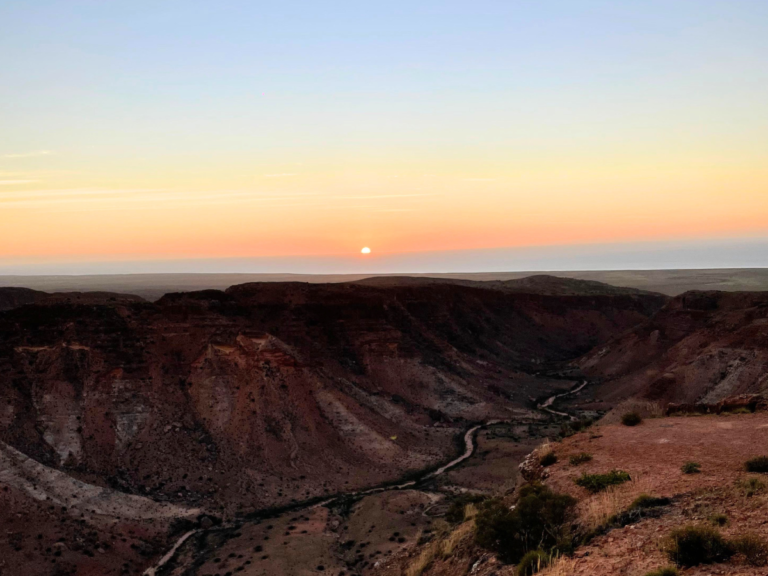
One of those places that genuinely stops you in your tracks. The canyon cuts dramatically through Cape Range, and the viewpoint is spectacular. The absolute best time to go is sunrise, arrive in the dark, and you’ll be rewarded with a sky full of stars before the light comes up and turns the red rock gold. It’s an early alarm, but completely worth it. You can read my full guide on Charles Knife Canyon here.
Cape Range National Park
The gorges, canyon walks and coastal lookouts throughout the park are stunning, and a great option when the wind is up. Yardie Creek Gorge is a highlight – short walk, big scenery, and black-footed rock wallabies on the cliff faces if you look up.
Vlamingh Head Lighthouse
Head up to the lighthouse at the tip of the cape for sweeping views over the Indian Ocean. During whale season, you’ll often spot humpbacks without booking a tour.
Coral Bay
About an hour south and worth the drive. Smaller, quieter, with the reef accessible directly from the beach. A solid backup plan if conditions in Exmouth are rough, and a genuinely beautiful spot in its own right.
Scuba Diving
The outer reef here is world-class. If diving is on your list, build in buffer days (see above).
Whale Shark Tours and Humpback Whale Experiences
The headline marine activities of winter. Book as far in advance as possible!
The Food, Drink and Vibe
This is where Exmouth surprises people. It’s a small town (about 2,500 permanent residents) but it punches well above its weight on the food and drink scene, and the whole place has an easy, laid-back coastal energy that’s hard not to love. Nobody’s in a rush. Everyone’s just been in the water. And with Exmouth winter keeping things mild and pleasant well into the evening, there’s every reason to linger over a beer and a pizza outside.
You can read my full and honest Exmouth food guide here.

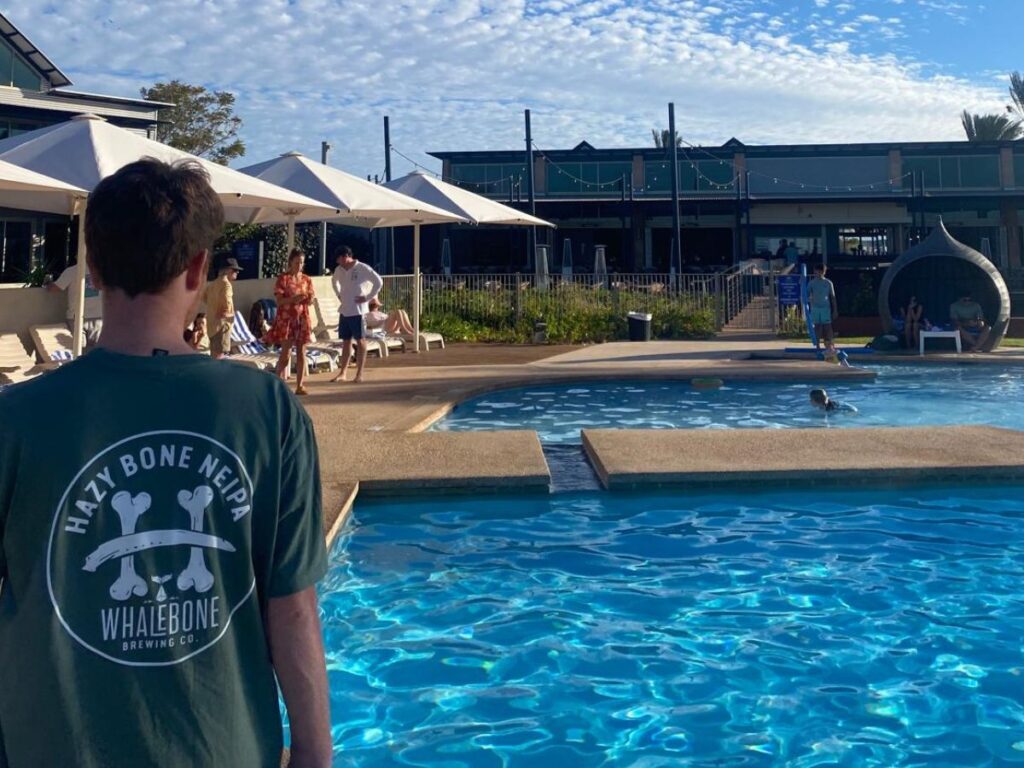
Whalebone Brewing Co
An essential stop. It’s a local craft brewery and distillery on Patterson Way, set up as an outdoor space with timber benches, a stage for live music, a kids’ play area and an entirely relaxed vibe. The beer is excellent (they brew onsite!) and also run the Ningaloo Distillery, producing craft gins and vodka using local botanicals and Gascoyne fruit. The stone baked pizza is actually great, using local ingredients where possible. After a big day exploring Ningaloo reef, or a long drive from Karijini National Park, there’s nowhere better to be. It regularly earns the top restaurant ranking in Exmouth on review sites, and it’s easy to see why.
The broader food scene has been quietly building too – Mantarays Ningaloo Beach Resort has a fantastic restaurant with seafood and gulf views, The Social Society does excellent plant-based food in a beautiful café setting, and there are good coffee spots and casual eateries dotted through town. Exmouth isn’t a big city, but you won’t go hungry.
@travelsbybryony Your sign to visit Bullara Station, Exmouth 📍 Bullara Station Stay is a working cattle farm between Exmouth and Coral Coast, and was one of our favouriate places to camp when travelling Western Australia. I’ve just released a full blog covering Bullara Station and what to to expect, link is in my bio 🥰 Would you stay here? #bullarastation #westernaustralia #exmouthwa #roadtripaustralia #campingaustralia ♬ som original – Warlei Oliveira
Where We Stayed (And What We’d Recommend)
We tried a couple of different options, which gave us a nice comparison.
Ningaloo Caravan and Holiday Resort
Our first night of the trip, and a great choice for central location. It’s walking distance to Whalebone Brewery, close to shops, cafés and the visitor centre, and the whole town is very accessible on foot from here. The on-site Pinocchio Italian Restaurant is a genuine bonus – great pizzas, pasta and gelato, and very handy when you come back from a long day and don’t want to go back out for dinner. There’s a pool, a café for morning coffee, clean facilities, and a relaxed park atmosphere. It suits campervans, caravans and cabin stays, and it fills up in peak season – book well ahead.
Mantarays Ningaloo Beach Resort
We splurged on a couple of nights here, treating ourselves before and after our planned scuba diving. The logic was simple: if we were going to be underwater for a full day, we wanted a proper night’s sleep both before and after, somewhere comfortable enough to actually rest and recover. It delivered. The resort sits right at the gateway to the reef, the restaurant is excellent (fresh seafood, gulf views, proper menu), and the whole experience felt like a genuine treat. Worth it for a special occasion night or as a way to bookend your trip.
Bullara Station Stay
Bullara Station Stay deserves a proper mention here because it’s genuinely one of the highlights of our Perth to Exmouth road trip, not just a convenient overnight stop. It’s a working cattle station about 90km south of Exmouth, and it offers powered and unpowered campsites, glamping tents and an indoor accommodation option for those who want a roof over their head.
What makes it special is the setting and the atmosphere. You’re in proper outback country (red dirt, open skies, and the kind of quiet that’s hard to find closer to the coast). There’s a camp kitchen and a fire pit area, and the station owners are genuinely welcoming. Winter is a brilliant time to stay here because the days are warm and clear, and the nights are cool enough to make a campfire feel essential rather than optional.
It’s around a 90-minute drive from Exmouth, which makes it a natural last stop on the way up or a first stop on the way back down. If you’re road-tripping and skipping Bullara because you want to push through to Exmouth faster, don’t!
Read my full Bullara Station review for everything you need to know before you book.
RAC Exmouth Cape Holiday Park
Another popular and central option we’d consider next time – 1km from town, close to the beach, with two pools, a tour desk, BBQ areas and pet-friendly sites. Another solid base for exploring but this gets booked up fast!
For camping directly in Cape Range National Park, sites open up for booking months in advance and sell out fast during winter peak, if that’s your plan, don’t delay. I wish we had done this as the sites were right on the coast and more rugged campground vibe over a caravan site (our preferred type of camping). You’ll need to book on the WA website here.
Planning the Drive Up? Don’t Skip These Stops
The Perth to Exmouth road trip is a journey worth taking seriously. The Coral Coast Highway covers around 1,250 kilometres and takes 13–14 hours straight through, but breaking it into two or three days turns it into an adventure.
Some of the best stops are the station stays along the way. I’ve put together a full guide to the best camping stations between Perth and Exmouth – worth reading before you hit the road. And if you’re thinking about extending your trip inland, our guide to campsites in Karijini National Park is essential – Karijini is absolutely worth combining with Exmouth if you have the time.
If Bullara Station is on your route (and it should be), read our full Bullara Station review here for everything you need to know.
FAQ: Everything You Need to Know Before You Go
How Do I Get to Exmouth? Perth to Exmouth Options
How far is Exmouth from Perth? Exmouth is approximately 1,250 kilometres from Perth by road, around 13–14 hours of driving if you went straight through. Most people wisely spread this over two or three days, making the Perth to Exmouth journey part of the experience.
Are there Perth to Exmouth flights? Yes – Qantas operates direct flights from Perth to Learmonth Airport, located about 25 minutes south of Exmouth town. The flight takes just under two hours, which makes it a very viable option if you’re coming from Sydney, Melbourne or elsewhere and connecting through Perth. You’ll need to arrange a hire car from the airport as there’s no public transport in this part of the world.
Should I fly or drive? The Perth to Exmouth drive along the Coral Coast is spectacular, with stops at Kalbarri, Shark Bay (Monkey Mia), Carnarvon and Coral Bay along the way. If you have the time, driving at least one way is highly recommended. If you’re coming from the east coast or are time-constrained, flying into Perth and hiring a car from Learmonth is perfectly easy and still gives you the full experience once you arrive.
What to Do in Exmouth
The things to do in Exmouth in winter could easily fill two weeks without repetition. Highlights include:
- Swimming with whale sharks on a guided tour (March–August, tours available into October)
- Snorkelling Ningaloo Reef – Turquoise Bay, Oyster Stacks, Lakeside and more
- Scuba diving the outer reef
- Humpback whale watching and swimming with humpbacks (June–October)
- Manta ray encounters on dive and snorkel tours
- Charles Knife Canyon, especially at sunrise
- Exploring Cape Range National Park – gorges, walks, wildlife
- Yardie Creek Gorge walk and black-footed rock wallaby spotting
- Vlamingh Head Lighthouse for whale spotting and views
- Craft beer and pizza at Whalebone Brewing Co
- Day trip to Coral Bay
- Sunset watching from the cape
- Fishing (offshore, beach and estuary)
- Kayaking and standup paddleboarding

Is Winter the Best Time to Go to Exmouth?
For most visitors, yes. If wildlife, comfortable temperatures and dry conditions are your priority, winter is the best time to go to Exmouth.
When Is Whale Shark Season in Exmouth?
Whale shark season in Exmouth typically runs from mid-March through to August, with many operators extending tours into October. The peak window (when sightings are most consistent) is April through July. During June and July, both whale sharks and humpback whales are present at Ningaloo simultaneously, making it one of the most wildlife-rich periods anywhere in Australia.
Tours operate daily during peak season (subject to weather and minimum numbers), with spotter planes used to locate the animals on the outer reef. Full-day tours depart around 7am and return in the late afternoon, including inner reef snorkel time plus the main event. Book as far in advance as possible – July especially fills out months ahead.
Where to Stay in Exmouth
Exmouth has a good range of accommodation, from national park camping to resort stays.
Mantarays Ningaloo Beach Resort – A 4.5-star resort at the gateway to the reef with an excellent seafood restaurant and gulf views. Ideal for a treat stay, or as we found, a well-earned comfortable base around a key diving or touring day. Worth booking well ahead.
Ningaloo Caravan and Holiday Resort – Central location within easy walking distance of Whalebone Brewery, shops and town. On-site Pinocchio Italian Restaurant (great pizzas, pasta and gelato), pool, café, and accommodation ranging from powered caravan and campervan sites to self-contained chalets. A solid mid-range option and very well-reviewed for its location and facilities.
Bullara Station Stay – about 90km south of Exmouth, is a working cattle station offering camping, glamping and indoor accommodation, and it’s one of those stops that turns a long drive into something worth looking forward to. Red dirt, open skies, a campfire on a cool winter night, it’s simple and brilliant. Read our full Bullara Station review before you book.
RAC Exmouth Cape Holiday Park – 1km from town and close to the beach, with two pools, BBQ areas, a games room, camp kitchen, tour desk and pet-friendly sites. Powered sites through to self-contained cabins. Very popular in peak season – book well ahead.
Cape Range National Park Camping – For those who want to sleep on the reef’s doorstep, national park campsites offer an incredible experience but sell out months in advance for the winter peak. Don’t leave booking until last minute.
Do I Need a 4WD in Exmouth?
Not for the main routes. The road from Perth to Exmouth along the Coral Coast Highway is fully sealed and in good condition, no 4WD required. Within Cape Range National Park, most of the key beaches and campgrounds are accessible in a standard 2WD vehicle, though some tracks to more remote spots will need a 4WD. Worth checking specific sites before you go if you’re in a standard car.
Is Exmouth Good for Families?
Yes, particularly in winter. The reef is accessible and safe for kids, many whale shark and wildlife tours welcome families, and the town itself is small and easy to navigate. Whalebone Brewing has a kids’ play area, many caravan parks are family-friendly, and the mix of beach, wildlife and nature is genuinely engaging for children. Winter’s mild temperatures make days outdoors comfortable without the extreme heat of summer.
How Much Time Should I Spend in Exmouth?
Minimum three to four days if you want to cover the main experiences, but a week is far better, especially if you’re doing water-based tours. As we learned, building buffer days into your itinerary is genuinely important: if a tour cancels due to weather, you want room to rebook. A week also gives you time to explore Cape Range properly, do a day trip to Coral Bay, and actually relax into the pace of the place. And if you’re making the Perth to Exmouth drive, factor in arrival and departure days, the journey itself deserves time.
Final Word on Exmouth in Winter
If you’re living in Australia and you haven’t been to Exmouth in winter, it deserves to be on your list. Winter is genuinely the best time to visit Exmouth: the Exmouth weather is perfect, the things to do in Exmouth are at their most spectacular, and when the rest of the country is cold and grey, the North West is doing something completely different – whale sharks, humpback whales, clear water, warm evenings and a small town that delivers an outstanding food and drink scene alongside world-class reef access.
Go in winter. Book your tours early in your stay. Give yourself enough days to absorb a cancellation and still have a brilliant trip.
We’re already planning the return trip. This time, we’re getting that scuba dive!!!
Planning the road trip from Perth? Don’t miss our guides to station stays along the Coral Coast, Bullara Station, Turquoise Bay, and Karijini National Park campsites.

Macedon Ranges: What to Do in a Perfect Weekend
If you are after a proper weekend escape from Melbourne, the Macedon Ranges should be…
Where to Stay in Daylesford: The Best Daylesford Accommodation 2026
Daylesford accommodation gets booked out fast, and once you have spent a weekend wandering Vincent…

Best Airbnbs in Daylesford: Stays for Every Budget
Daylesford has a way of pulling Melbourne day trippers into staying the night, and once…
Things to Do in Daylesford: The Ultimate Local’s Guide
If you want a Melbourne getaway without hours in the car, Daylesford is hard to…
Perth to Exmouth Itinerary: Full Coral Coast Road Trip
If you are staring at a map trying to turn Perth to Exmouth into an…

How Many Days in Exmouth WA? Full Trip Guide
If you’re trying to work out how many days in Exmouth WA you need, this…