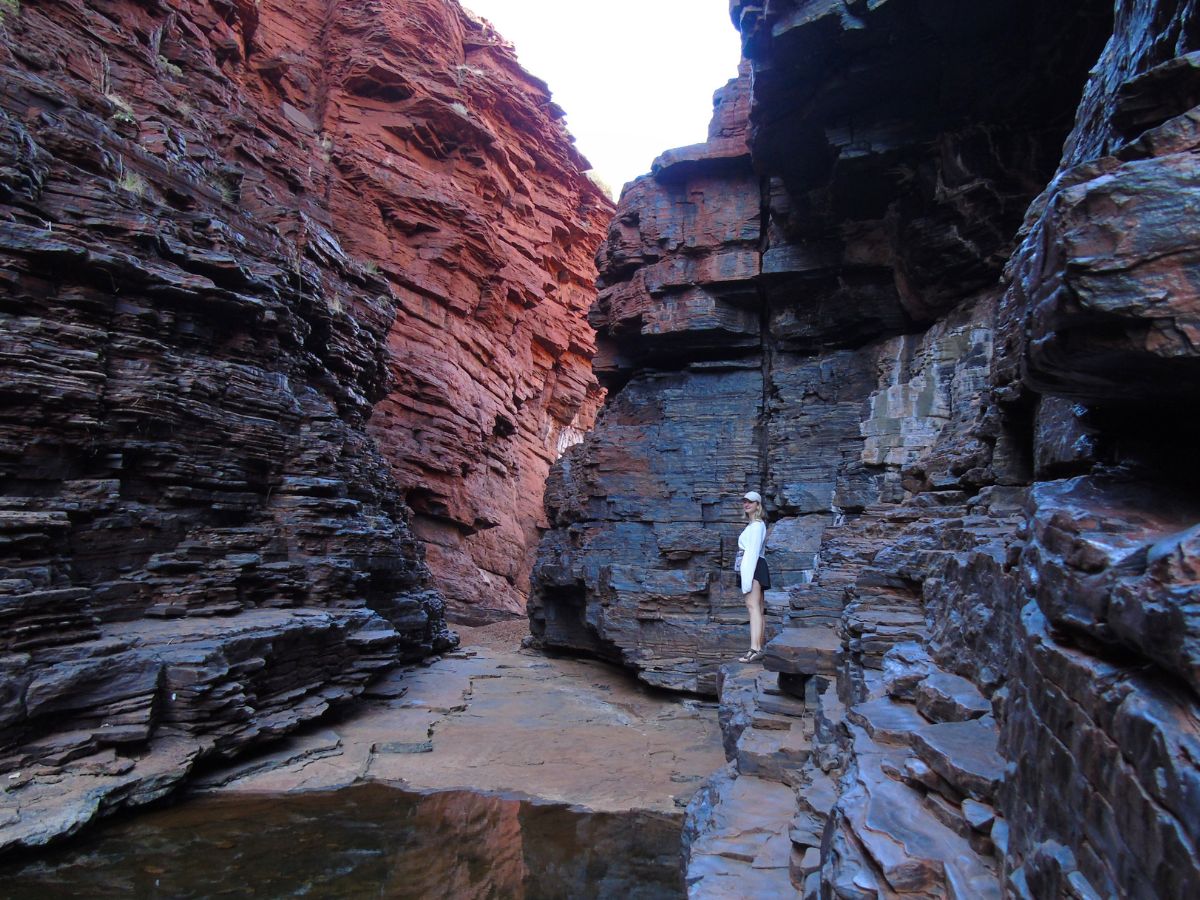
Karijini National Park: Complete Travel Guide to the Best Gorges in Western Australia
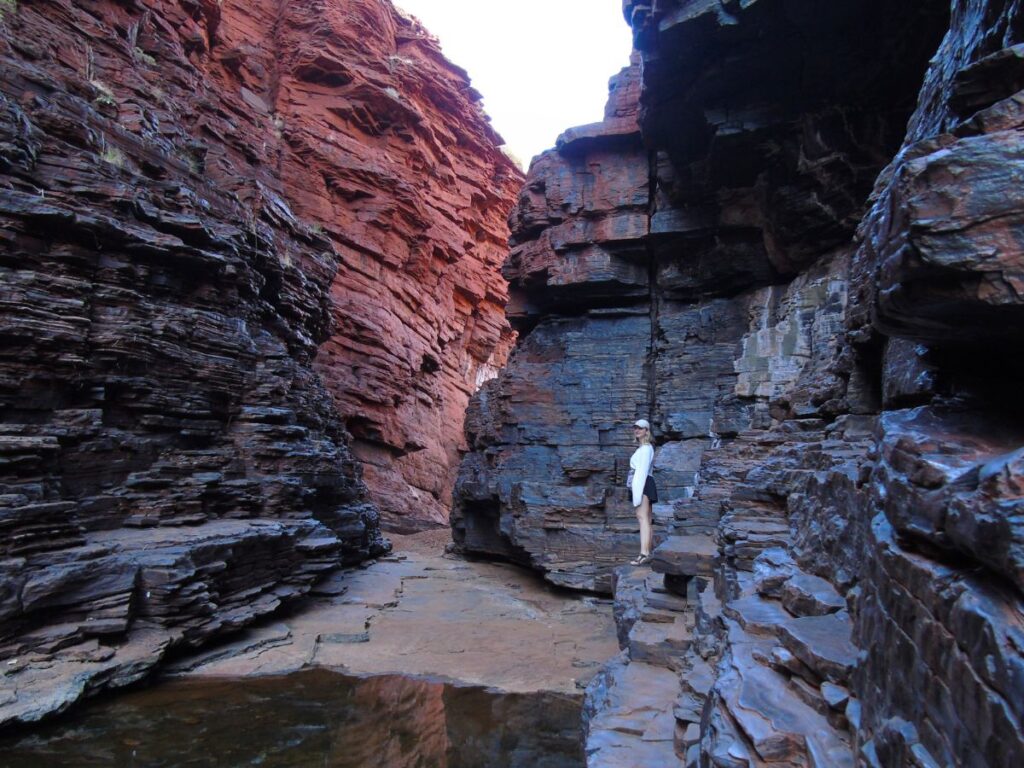
If you’ve stumbled across photos of ancient red gorges, hidden turquoise swimming holes and narrow canyon walls that look almost too dramatic to be real… welcome to Karijini National Park.
This is the complete guide to planning your trip, covering everything from how to get here and when to visit, to the best gorges, where to camp and the practical things nobody tells you until you arrive.
I visited Karijini as part of our Perth to Exmouth road trip and it ended up being one of the most unforgettable stops of the entire journey. There’s something about swimming through hidden gorges and watching the sunset over the Pilbara that makes Karijini feel unlike anywhere else in Australia.
Where is Karijini National Park?
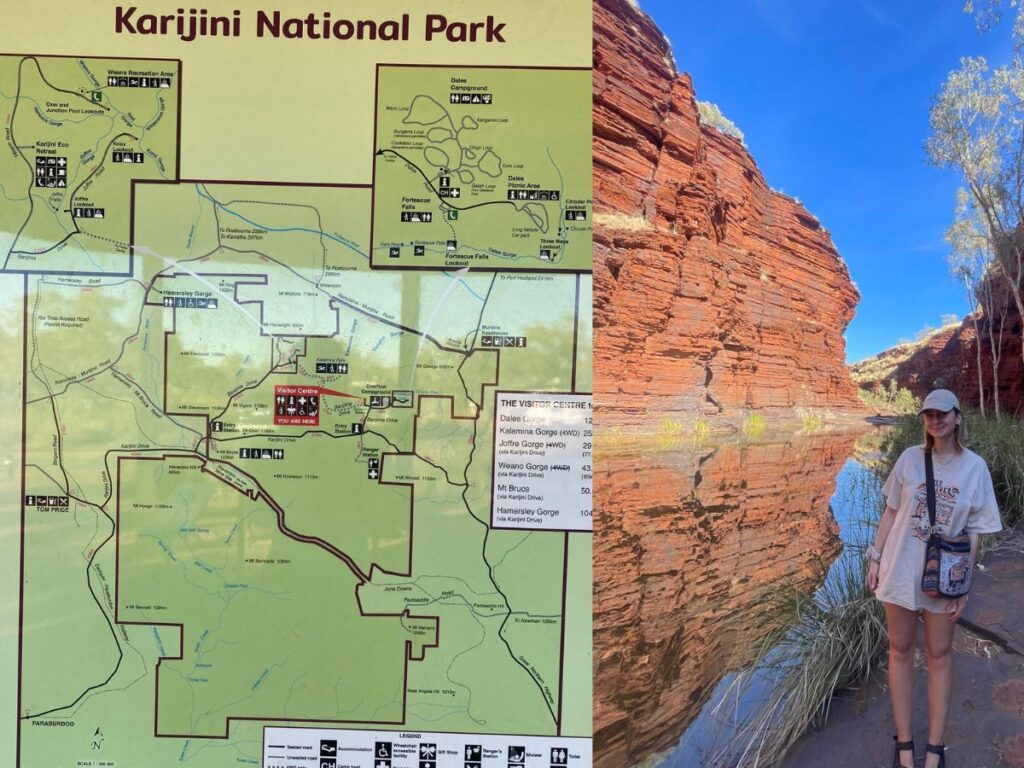
Karijini is located in the remote Pilbara region of Western Australia, around 1,500km north of Perth and 600km from Exmouth. It sits inland away from the coast, in a landscape defined by ancient red rock, sparse bushland and enormous open skies.
The closest town is Tom Price, and the nearest fuel stops are Tom Price itself and the Auski Roadhouse. There is no fuel, drinking water or phone reception inside the park, so planning ahead is essential.
This is what it actually looks like driving through Karijini…
@travelsbybryony Windows down, somewhere in Karijini National Park 📍 Driving through the park from gorge to gorge, really felt like we were in another world Wedtern Australia, you are unreal!! #karijini #karijininationalpark #westernaustralia #outbackaustralia #naturetravel ♬ fade into you mazzy star – hopeless sandoval
Best Time to Visit Karijini National Park
The best time to visit Karijini is between May and September. During these months temperatures sit at a comfortable 25–30 degrees during the day, the swimming holes are full of bright blue fresh water and the gorges are green and accessible.
Avoid visiting between November and March. Karijini sits in the Pilbara, one of the hottest regions in Australia, and summer temperatures regularly exceed 40 degrees. The wet season can also cause gorge closures and dangerous flash flooding conditions.
I visited in August and the weather was perfect for hiking, swimming and camping. The gorges were at their best and the evenings were cool and clear – though be warned, the clear skies mean very (very!) cold nights, so pack warm layers if you’re camping.
How Many Days Do You Need in Karijini?
I’d recommend a minimum of four days and three nights. This gives you enough time to explore the major gorges across both sides of the park without rushing, enjoy some proper swimming stops and experience the remote camping that makes Karijini feel so special.
If you’re short on time and can only manage two or three days, prioritise:
- Dales Gorge
- Hamersley Gorge and the Spa Pool
- Hancock Gorge
These three alone will give you a genuinely unforgettable introduction to the park.
One important thing to factor in: Karijini is huge. The distance between the eastern gorges (like Dales Gorge) and the western gorges (like Hamersley Gorge & Spa Pool) is around 1.5-2 hours of driving, much of it on rough, unsealed roads. Plan your accommodation around which gorges you want to explore each day to avoid unnecessary backtracking. I covered the best Karijini campgrounds in my Karijini accommodation guide here.
Top tip: If you’re driving from Perth, the in land journey straight to Karijini takes around 14 hours. We broke it up with an overnight stop at Nallan Station in Cue. I’d recommend arriving in Karijini the evening before your first full day so you’re not losing half a day to driving, and then be too tired to fully enjoy it.
Getting There: How to Reach Karijini National Park
From Perth: The most common route is the inland drive via the Great Northern Highway – roughly 14 hours. You can also fly into Newman or Tom Price and hire a car, which works well if you’re short on time but still want to experience Karijini National Park properly.
From Exmouth: Around 6 hours inland via Nanutarra Road and the Karijini Drive turn-off.
Do you need a 4WD? Not necessarily for the main gorges. Many of the major attractions are accessible in a 2WD during dry conditions, but some roads, particularly to Hamersley Gorge and hidden camping spots like Buddha’s Overnighter, are rough gravel tracks where a 4WD makes a significant difference. I’d recommend checking in at the Karijini Visitor Centre when you arrive for the latest road and gorge conditions.
The Gorges of Karijini National Park
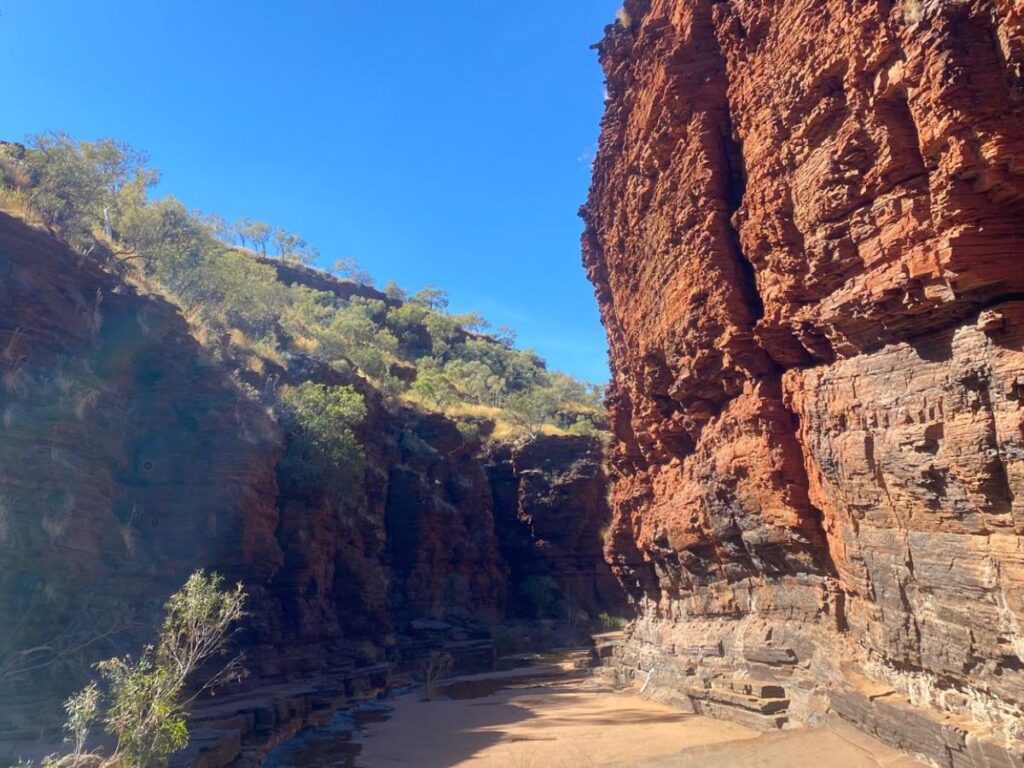
What makes Karijini National Park so extraordinary is how different each gorge feels. Some are wide and accessible, with easy walking tracks, permanent waterfalls and calm swimming holes. Others narrow into slot canyons where you scramble through water, climb ladders and squeeze between walls that are hundreds of millions of years old.
The rocks themselves are estimated to be over 2.5 billion years old – some of the oldest exposed rock formations on Earth. Every gorge feels like stepping into another world.
Here’s a quick breakdown of each gorge and what it offers. For full details on every gorge including hike info and top tips, head to my guide to the 7 best Karijini gorges.
Hancock Gorge – the most adventurous gorge in the park. Famous for the Spider Walk, where you brace yourself between the canyon walls above the water. If you only do one adventurous gorge, make it this one.
Weano Gorge – combines easier walking sections with ladder descents, water crossings and incredible red rock scenery. A great option for first-time visitors who want adventure without a gruelling hike.
Hamersley Gorge – on the western side of the park and worth the drive. Famous for the Spa Pool, a naturally heated rock pool surrounded by swirling layered rock formations that look almost unreal. The gorge took us about 1.5 hours to reach from the central gorges (and we chipped our window screen on the gravel road… take it slow).
Dales Gorge – the best all-round gorge and the perfect starting point for first-time visitors. Home to Fortescue Falls, one of the only permanent waterfalls in Karijini, and Fern Pool, a peaceful swimming spot tucked beneath the gorge walls. Walking through the base of Dales Gorge was one of my favourite experiences in the entire park, above the gorge feels dry and rugged, but once you descend, everything suddenly becomes green and lush.
Kalamina Gorge – my personal favourite. Quieter and less visited than the bigger gorges, but the scenery is stunning. Narrow layered rock walls, calm swimming holes and a peaceful, hidden atmosphere. The rough unsealed access road keeps most visitors away, which is exactly why we loved it.
Knox Gorge – wild, dramatic and far less crowded than the famous gorges. The lookout alone is worth the stop, with canyon walls dropping away beneath you.
Joffre Gorge – the most accessible gorge if you’re staying at Karijini Eco Retreat. Known for its circular amphitheatre shape and layered red rock walls. Great for sunrise or sunset exploring.
@travelsbybryony This free camping spot near Karijini National Park, was a highlight for both of us 🌿🥰 The view of the mountains from this spot was just incredible. It was also right next Hamersley Gorge, perfect for visiting while on your road trip. 📍Buddhas Campground, Western Australia #australia #campingaustralia #freecamping #westernaustralia #australianoutback #karijini #karijininationalpark #4wd #4wdaustralia #campinglife #remoteaustralia ♬ Just A Little While – The 502s
Where to Stay in Karijini National Park
Because the park is so large, I’d strongly recommend splitting your stay across at least two different campgrounds – using different bases for different sides of the park saves significant driving time.
For a full breakdown of every campsite including facilities, pricing and booking links, head to my guide to the best campsites in Karijini National Park.
Here’s a quick summary:
Dales Gorge Campground – the best central base for the eastern gorges. Only 1–2km from Fortescue Falls and Dales Gorge. Classic remote Australian outback camping – red gravel dirt, sparse bushland, big open skies. No drinking water or showers. Books out months in advance in peak season, so plan early. Around $15 per adult per night.
Karijini Eco Retreat – the only glamping-style accommodation inside the park, and 100% Aboriginal-owned by the Banjima, Yinhawangka and Nyiyaparli people. Located near Joffre Gorge on the western side of the park, with premium eco tents, an onsite restaurant and proper showers. We couldn’t get availability because we left it too late, but if you can book it – do. Camping from around $20pp per night, however they have eco tents from $500+.
Karijini Overflow Campground – a reliable backup if the main campgrounds are full. Very basic facilities but still requires advance booking during peak season. From around $15pp per night.
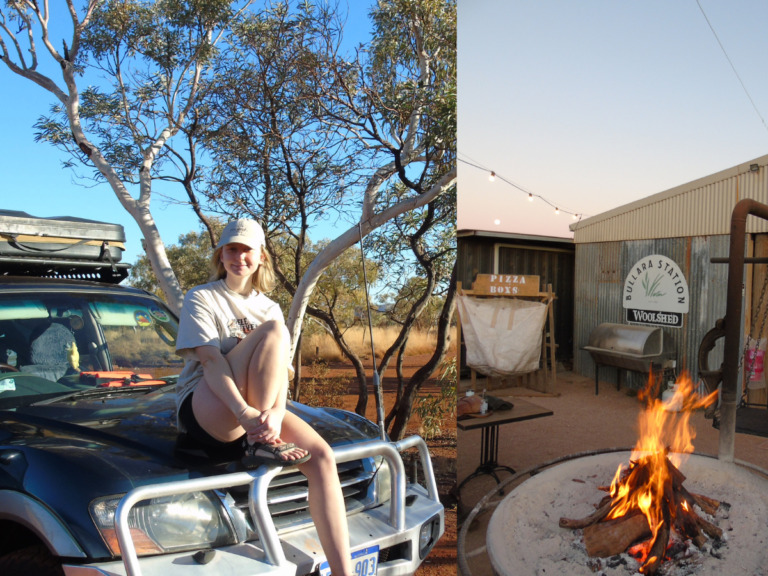
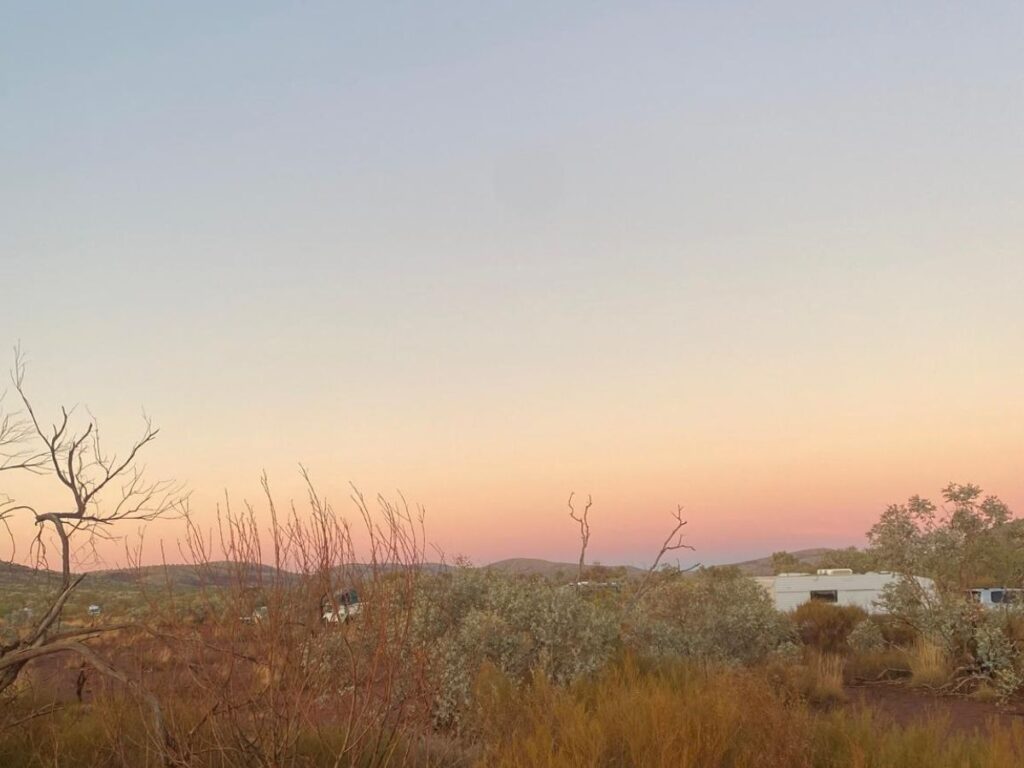
Buddha’s Overnighter – the REAL hidden gem. A free, completely off-grid bush campsite outside the park, around 1–2 hours from the central gorges but close to Hamersley Gorge. The further in you drive, the more secluded it gets. We ended up camped amongst nothing but red dirt, open skies and some of the clearest stars we saw on the entire WA road trip. Completely self-contained only, no facilities whatsoever. Best accessed with a 4WD due to 55km of rough gravel road (this is when we chipped our windowscreen).
Mt Bruce Campsite – basic free bush camping near the base of Mt Bruce (Punurrunha), Western Australia’s second-highest mountain. Best used if you’re planning the sunrise hike. Arrive the afternoon before to secure a spot.
A Sample Four-Day Karijini Itinerary
For a detailed day-by-day breakdown with hike times, driving distances and tips, head to the complete Karijini itinerary. Here’s the overview:
Day 1 – Dales Gorge, Fortescue Falls and Fern Pool Start at the Karijini Visitor Centre, then spend the day exploring the eastern side of the park. Walk the Dales Gorge Rim Walk before descending into the gorge, swimming at Fortescue Falls and continuing to Fern Pool. Stay at Dales Gorge Campground.
Day 2 – Kalamina Gorge, Knox Gorge and Joffre Gorge Focus on the quieter, more underrated gorges. Kalamina first thing (the road puts most people off, use that to your advantage), then Knox for the dramatic views, then Joffre in the afternoon. If you can get availability, this is the night to treat yourself to Karijini Eco Retreat.
Day 3 – Hancock Gorge, Weano Gorge and Oxer Lookout The most adventurous day. Start early at Hancock Gorge for the Spider Walk before crowds arrive, then Weano Gorge, then Oxer Lookout where four massive gorges converge – one of the best viewpoints in the park. Drive toward Mt Bruce campsite in the afternoon to set up for an early start.
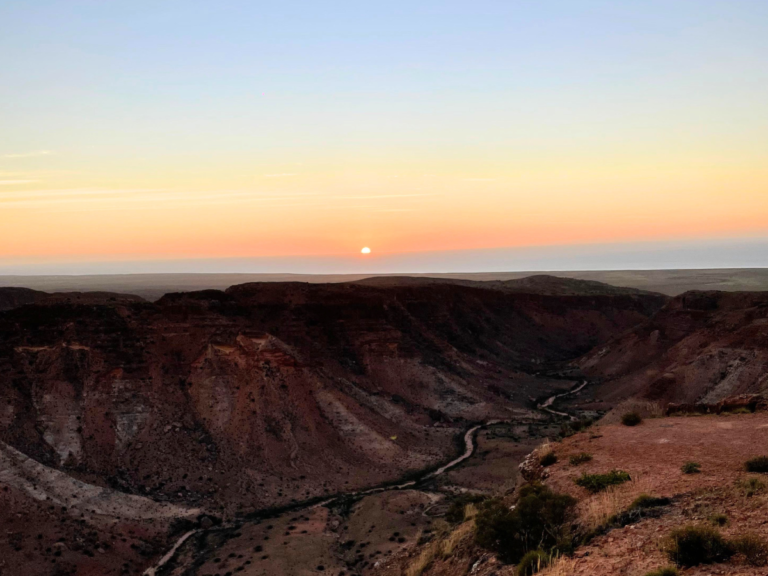
Day 4 – Mt Bruce Sunrise Hike and Hamersley Gorge Spa Pool Wake before sunrise and tackle Mt Bruce – the views across the Pilbara are extraordinary. After the hike, drive to Hamersley Gorge and finish at the Spa Pool. A cold swim in that natural rock pool after a sunrise mountain hike is one of those moments you won’t forget.
Practical Tips for Visiting Karijini National Park
- Fuel up before entering the park. There is no fuel inside Karijini – fill up in Tom Price or at the Auski Roadhouse.
- Download offline maps before you arrive. Phone reception is virtually non-existent throughout the park.
- Start hikes early. The midday heat is intense even in winter, and the famous gorges get busy by mid-morning.
- Carry more water than you think you need. Then carry more again.
- Wear shoes with proper grip. The rocks inside the gorges are extremely slippery, especially near water.
- Pack warm layers. Clear skies mean very cold nights, regardless of how hot the days are.
- Bring a waterproof bag for phones and cameras on the more adventurous gorge hikes like Hancock and Weano.
- Check gorge conditions at the visitor centre. Some gorges close after rain and conditions can change quickly.
- Book accommodation well in advance. Peak season (June–September) books out months ahead, especially Dales Gorge Campground and Karijini Eco Retreat.
- Keep food secured at camp. Dingoes are common throughout this part of Western Australia. We heard them howling throughout the night at the Overflow Campground.
What to Pack for Karijini National Park
- Hiking shoes with strong grip
- Water shoes for gorge swimming
- Swimmers
- Quick-dry towel
- Waterproof bag
- Plenty of water and food — more than you think
- Fly nets (essential outside of winter)
- Sunscreen
- Torch or headlamp
- Warm layers for evenings
- Offline maps downloaded before you arrive
- Camping gear if you’re not staying at Karijini Eco Retreat
Is Karijini National Park Worth Visiting?
Absolutely, without question. Karijini National Park ended up being one of the most unique and memorable places I’ve ever visited in Australia. The combination of red rock gorges that have been carved over billions of years, hidden swimming holes that appear out of nowhere, remote camping under enormous skies and genuinely adventurous hiking is unlike anything else in Australia.
Whether you’re on a Perth to Exmouth road trip, planning a Pilbara adventure or simply looking for somewhere completely off the beaten track – Karijini belongs on your list.
Just don’t underestimate the distances, book your accommodation early and give yourself more time than you think you need. You’ll wish you’d stayed longer.
Explore the Full Karijini Guides
- 7 Best Karijini Gorges You Can’t Miss
- Complete Karijini National Park Itinerary (4 Days)
- Best Campsites in Karijini National Park
- Perth to Exmouth Road Trip: The Complete Guide

Macedon Ranges: What to Do in a Perfect Weekend
If you are after a proper weekend escape from Melbourne, the Macedon Ranges should be…
Where to Stay in Daylesford: The Best Daylesford Accommodation 2026
Daylesford accommodation gets booked out fast, and once you have spent a weekend wandering Vincent…
Best Airbnbs in Daylesford: Stays for Every Budget
Daylesford has a way of pulling Melbourne day trippers into staying the night, and once…
Things to Do in Daylesford: The Ultimate Local’s Guide
If you want a Melbourne getaway without hours in the car, Daylesford is hard to…
Perth to Exmouth Itinerary: Full Coral Coast Road Trip
If you are staring at a map trying to turn Perth to Exmouth into an…

How Many Days in Exmouth WA? Full Trip Guide
If you’re trying to work out how many days in Exmouth WA you need, this…