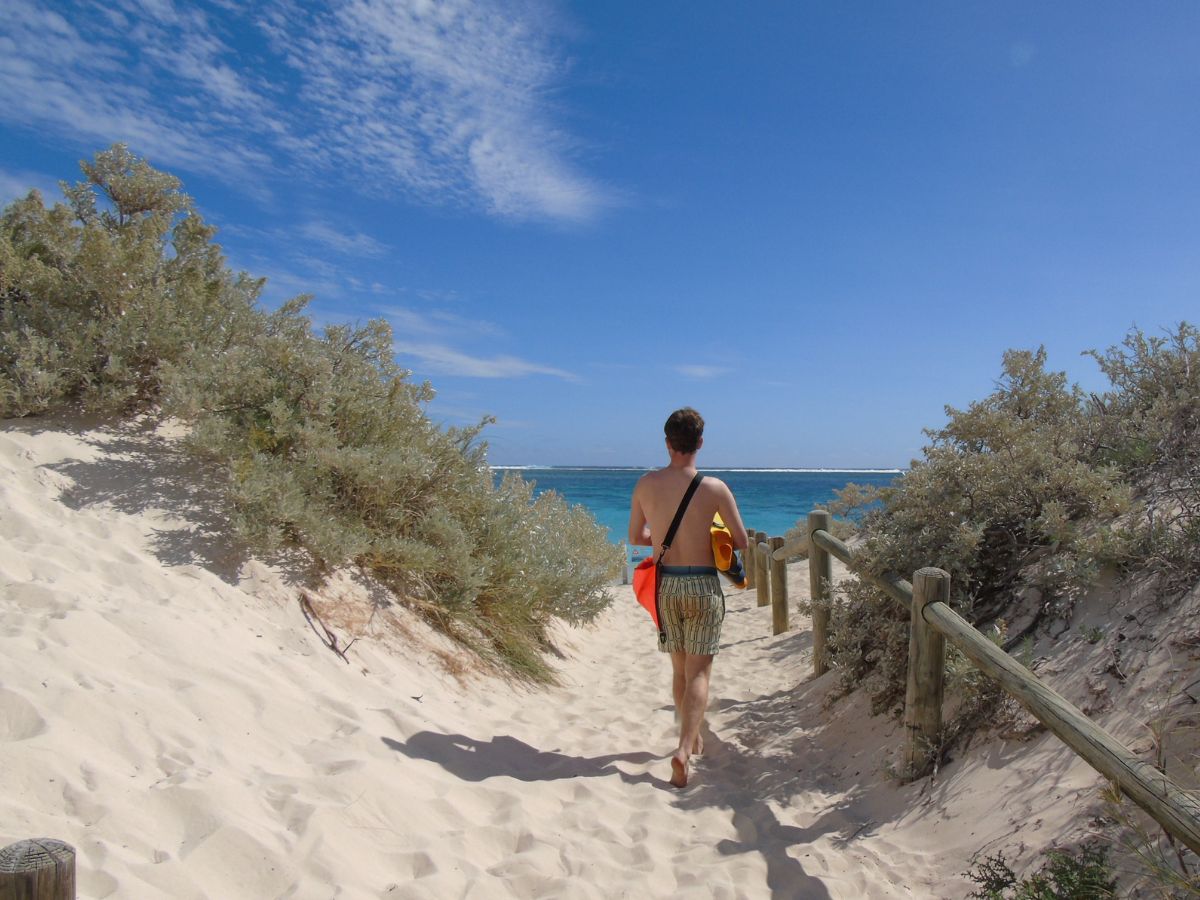
Exmouth Weather Guide: What to Expect Month by Month
Exmouth is one of those places that positively gets under your skin. Sitting at the tip of the Cape Range Peninsula in Western Australia, it’s the gateway to Ningaloo Reef – one of the most biodiverse marine environments on the planet. But Exmouth weather can be unpredictable, and timing your visit here can make or break your trip.
I know this from experience…
We visited in August – peak season, on paper one of the best months for Exmouth weather of the year. And honestly? It humbled us. Three days of overcast skies, strong winds, our scuba diving cancelled and unable to be rescheduled in time before we had to leave. Snorkelling spots that are usually crystal clear were murky and low visibility. We still got in the water. We still saw sealife. But it wasn’t what we’d imagined.
@travelsbybryony So many special moments on this trip, including watching the sunrise over Charles Knife Canyon in Exmouth 🌅🧡 The sunrise was beautiful, but honestly our favourite thing about this was getting there while it was pitch black, clear skies and soooo many stars 🌟 Charles Knife Canyon is a must while in Exmouth, Western Australia – add this to your roadtrip itinerary!! #travelaustralia #westernaustralia #australiaroadtrip #exmouthwa #charlesknifecanyon ♬ Knockin' on Heaven's Door – Bob Dylan
So before I give you the month-by-month breakdown for Exmouth weather, let me say this clearly: Exmouth is extraordinary, but it does not always cooperate. Here’s what you need to know to give yourself the best chance.
Getting There: Perth to Exmouth
Before we dive into the weather, it’s worth talking about the journey, because for most visitors, the trip from Perth to Exmouth is half the experience.
The Perth to Exmouth drive covers roughly 1,250 kilometres along the Coral Coast Highway, and if you drove it straight through, it would take around 13 – 14 hours. Most travellers wisely spread it over two to three days, stopping at highlights like Kalbarri, Shark Bay (Monkey Mia), and Coral Bay along the way. The roads are sealed and in good condition, no 4WD required for the main route. If you are driving from Perth to Exmouth, visit my best station stays between Perth and Exmouth blog, for some of the best accommodation up the Coral Coast.
If you’d rather not drive, there are direct flights from Perth to Learmonth Airport (just outside Exmouth), with a flight time of around two hours. Keep in mind you’ll still need a car once you arrive… public transport doesn’t reach Exmouth!
Whether you fly or drive, factor Exmouth weather into your timing: arriving during a wind event or cyclone risk period can significantly affect what’s possible once you get there.
Understanding the Seasons for Exmouth Weather
Exmouth weather splits broadly into two seasons – a hot, cyclone-prone wet season (roughly December to March) and a dry season (April to November) that draws the crowds. But within that dry season, conditions shift considerably month to month.
Autumn (March – May) is arguably the most underrated time to visit. Temperatures are warm and manageable, the water is clear, and whale shark season has just kicked off. Crowds are still building, so you’ll find availability much easier to navigate.
Winter (June – August) is peak season. The weather is comfortable, humpback whales are arriving, and both whale sharks and manta rays are active. It’s magnificent – but everyone else knows this, making very busy, booked out well in advance, and yes, it can still get windy.
Spring (September – November) sees crowds thin and temperatures warming back up. Whale watching continues into October, and turtle mating season begins from September. But the wind picks up noticeably and can make snorkelling conditions patchy.
Summer (December – February) is brutal. Temperatures regularly exceed 40°C, cyclone risk is real, and camping becomes genuinely uncomfortable. Marine life is still active with turtles nesting and hatching, but for most travellers, it’s not worth the trade-off.
Exmouth Weather Month-by-Month Guide
March
Whale shark season opens, usually around mid-March, which is Exmouth’s headline activity. Temperatures are still hot but starting to ease. It’s a solid shoulder-season option if you’re specifically chasing whale sharks and want to avoid the July crowds. Keep an eye on cyclone forecasts… the risk is low by now but not yet zero.
April
One of the best all-round months to visit. Weather is warm and pleasant, the water is clear and calm, whale sharks are active, and the crowds haven’t hit their peak yet. If you want a balanced experience without the booking stress of peak winter, April is hard to beat.
May
Often considered the sweet spot. Conditions are excellent, snorkelling visibility tends to be at its best, whale sharks are still around, and you get that rare combination of great marine life with manageable tourism numbers. If you can only pick one month, May is worth serious consideration.
June
Peak season begins. Humpback whales start arriving to join the whale sharks, making June one of the richest months for marine encounters. Days are shorter and it can feel cool in the evenings, but the trade-off is worth it for many visitors. Book accommodation and tours well ahead, months ahead, things fill up seriously fast!
July
The most popular month of the year. Temperatures are perfect (averaging around 24 – 25°C), whale sharks and humpback whales are both present, manta rays are highly active, and the reef is buzzing. If you want the full Exmouth experience and don’t mind the crowds and prices that come with peak season, July delivers.
August
On paper, August is still very much peak season – similar to July, slightly less crowded toward the end of the month. Humpback whale numbers are strong, manta ray season is in full swing, and the days are comfortable. The conditions can be excellent.
But here’s what I can tell you from personal experience: August can also be unpredictable.
Our first day at Turquoise Bay was genuinely beautiful. The drift snorkel (where you let the current carry you along the reef) was clear and calm, with great visibility. It’s as good as everyone says, and we were glad we got in early. The day after, the winds rolled in and didn’t really let up for the rest of our stay.
With our scuba diving cancelled and unable to be rescheduled before we had to leave, we regrouped and headed down to Coral Bay instead. We got in the water early, around 9am, and the visibility was still pretty poor from the swell the day before and it was a little chilly. It wasn’t worth staying in long. So we grabbed coffee, waited it out, and went back around 1pm.
What a difference a few hours made. The water had settled enough to see clearly, and we were rewarded: loads of fish, and a couple of dolphins that seemed entirely unbothered by us. Not the diving trip we’d planned, but a good reminder that patience and flexibility can still get you something special.
It was a good lesson overall: even in peak season, Exmouth weather is a wild thing. Build flexibility into your plans, and if scuba or specific tours are non-negotiable, allow buffer days in case of cancellations. We were gutted to have missed out on our scuba experience.
September
September gets underrated by travellers chasing the main marine life events, but it has its own appeal. Crowds thin considerably, accommodation becomes much easier to find, and humpback whale watching continues into October. The catch is that winds increase noticeably during this month and can persist for days at a time… something that directly affects water clarity and diving/snorkelling conditions!
October
A genuine shoulder season pick. Whale watching continues, temperatures are warming but not yet uncomfortable, and tourist numbers are well down from peak. Snorkelling can be great on calm days, but conditions are even more unpredictable. Turtle mating activity begins, and wildflowers in Cape Range National Park add another dimension to the experience.
November
A transition month. Heat is building, turtle nesting season begins along the beaches, and the Ningaloo Coast starts shifting toward its summer character. Fewer tourists, but fewer ideal conditions too. For most travellers, this is the last sensible month before things get genuinely challenging.
December – February
The summer months are for the hardy and heat-tolerant. Temperatures regularly push past 40°C, humidity rises, and the cyclone risk is real. Turtle hatchlings emerge between January and March, which is a remarkable spectacle if you can time it. But the combination of extreme heat, potential storm activity, and limited services makes this a difficult time for most visitors to plan to visit.

Best Time for Specific Experiences
Snorkelling Ningaloo Reef: April to June offers the clearest, calmest conditions. Winter months can still be excellent but wind is a factor. You can read my full guide to Turquoise Bay here.
Whale Sharks: March to July, with peak sightings from April to June. This is the experience many people plan their entire trip around – book tours early.
Humpback Whale Watching: June to October. You can often spot them from the beach, which is one of Exmouth’s great free experiences.
Manta Rays: Present year-round, but encounters peak from mid-May to mid-September when numbers are highest in the Exmouth Gulf.
Sea Turtles: Mating from September to November, nesting from November to January, hatching from January to March. An incredible wildlife event, though the hottest months come with real trade-offs.
Scuba Diving: Conditions are generally best from April to September. Always have a backup plan – as we learned firsthand, even peak season can bring cancellations.
Charles Knife Canyon: visit between April and October – cooler temperatures make the sunrise drive comfortable and the canyon walls glow golden in the crisp morning light. You can read my full guide to visiting the canyon here.
Our Honest Take Towards Exmouth Weather
The best time to visit Exmouth for most people is somewhere between April and July. April and May offer excellent conditions with more breathing room; June and July deliver peak wildlife but require advance planning and some tolerance for busy campgrounds and booked-out tours.
August is still a good time to visit – but go in with eyes open. It’s technically peak season, but it’s also the month where wind can flip your plans overnight. We’re glad we went. We’d go back. But we’d build in more days and hold our itinerary a little more loosely if we could. Also be sure to book your accommodation months in advance to avoid disappointment. I would recommend staying at least two nights at Bullara Station Stay (between Exmouth and Coral Bay), read my blog here to read all about it.
It’s worth noting that opening hours for cafes, restaurants and tour operators in Exmouth can shift with the season too. During the quieter wet season months, some venues reduce their days or hours, and a few close altogether for a break before the peak crowds return. If you’re planning meals around your trip, it’s worth checking ahead or building in some flexibility, especially outside the main April to October window. For a full rundown of where to eat and what’s worth building into your itinerary, check out our Exmouth food and drink guide.
Whether you’re making the Perth to Exmouth drive and soaking up the Coral Coast along the way, or flying straight in for a long weekend, Exmouth is one of the most special places in Australia. It’s just not the kind of place that bends to your schedule. Respect the weather, plan around it, and it will absolutely deliver!
Be sure to check the weather before your trip so you can prepare accordingly.
Have you visited Exmouth? We’d love to hear when you went and what conditions were like – drop a comment below.

Macedon Ranges: What to Do in a Perfect Weekend
If you are after a proper weekend escape from Melbourne, the Macedon Ranges should be…

Where to Stay in Daylesford: The Best Daylesford Accommodation 2026
Daylesford accommodation gets booked out fast, and once you have spent a weekend wandering Vincent…

Best Airbnbs in Daylesford: Stays for Every Budget
Daylesford has a way of pulling Melbourne day trippers into staying the night, and once…
Things to Do in Daylesford: The Ultimate Local’s Guide
If you want a Melbourne getaway without hours in the car, Daylesford is hard to…
Perth to Exmouth Itinerary: Full Coral Coast Road Trip
If you are staring at a map trying to turn Perth to Exmouth into an…

How Many Days in Exmouth WA? Full Trip Guide
If you’re trying to work out how many days in Exmouth WA you need, this…